
A neighbourhood group needs a room for two hours on a wet Tuesday evening. The library meeting room is booked, the café is too loud, and hiring a commercial venue would consume the project’s small budget. On the same street, a school hall is dark. An office training room has been empty since five. A place of worship has a side room that will not be used until the weekend.
The shortage is real for the group, yet it may not be a shortage of floor area. It may be a shortage of coordination. Buildings are normally counted in square metres, but their civic usefulness also changes by the hour. What if every participating building published the times when one of its rooms could safely be used?
The proposition is deliberately larger than a booking app. Imagine a citywide ledger of room-hours: time-limited offers of space, with the conditions that make each offer genuinely usable. Pushed to its limit, the idea suggests that unused time in buildings could become a shared civic resource. Worked back to reality, it becomes a smaller and more demanding question: can five local buildings reveal one safe, affordable slot that would otherwise remain dark?
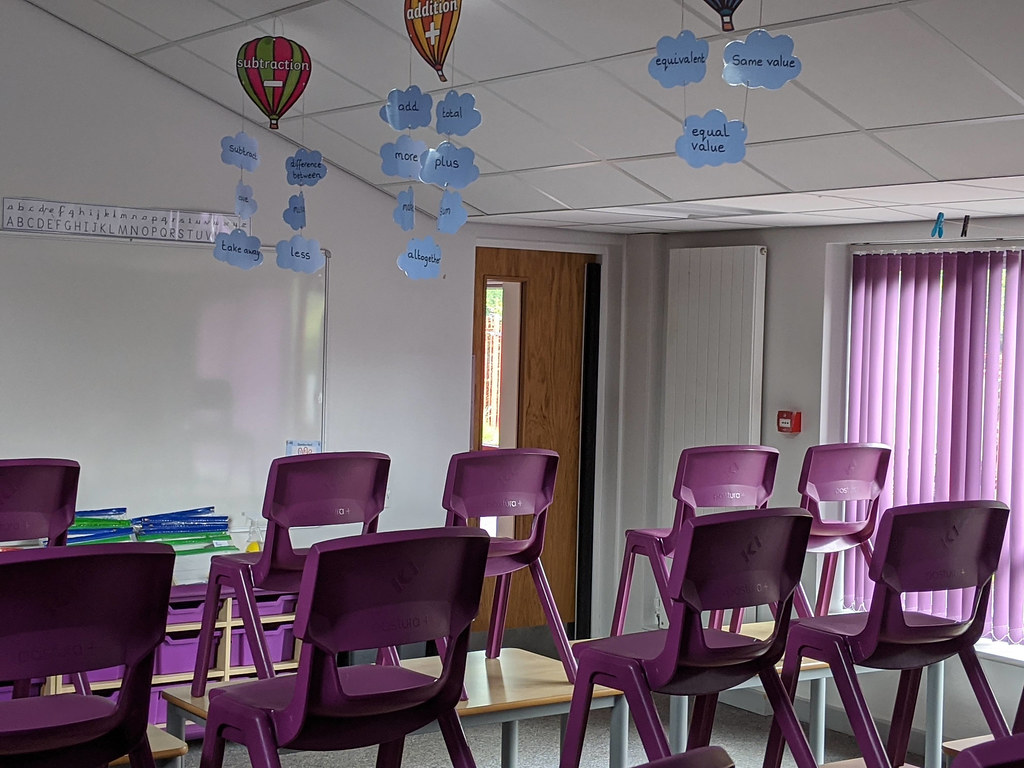
Empty is not a property of a room
A room is not available merely because nobody is standing in it. A usable room-hour is produced by a chain of conditions: permission, a key or access system, heating and lighting, toilets, insurance, cleaning, safeguarding, accessibility, supervision, setup time and a responsible person who can close the building afterwards. Break one link and the apparent vacancy disappears.
This is the surprising mechanism. The scarce resource is often not the room but the capacity to host. A building manager may have plenty of empty floor space and no budget for a caretaker’s extra shift. A school may welcome a community activity in principle but be unable to mix it with children’s areas. An office may have an accessible entrance during working hours but lock the lift after reception closes.
That is why existing shared-use practice is more instructive than the fantasy of frictionless access. The US Centers for Disease Control and Prevention describes shared-use agreements as formal arrangements that define the terms, costs and risks of public access to facilities such as schools after hours. OECD work on shared school facilities likewise stresses that common use depends on governance structures, not goodwill alone; without durable mechanisms and incentives, cooperation tends to rest on informal relationships.
A room-hours ledger would therefore need to publish more than a green dot on a calendar. Each offer would include capacity, accessibility, permitted activities, noise limits, cost, host responsibility, opening and closing time, and the buffer needed for setup and cleaning. It might show broad availability bands rather than sensitive schedules. The ledger would not make a room public property. It would make a specific, revocable offer legible.
Push the idea until it becomes uncomfortable
At city scale, the ledger could change how institutions describe capacity. A school extension, community hub or new cultural venue might still be necessary, but its case would be tested against the room-hours already present nearby. Capital budgets could include money for the less glamorous infrastructure of sharing: partitioning, independent entrances, storage, accessible toilets, digital locks, caretaking and insurance. New public buildings could be designed with zones that can open independently after hours.
The thought experiment also exposes a limit. If every idle room were treated as a resource waiting to be optimised, buildings would lose their rhythms of rest, maintenance and privacy. A school is not a rentable shell. An office may contain confidential work. A place of worship is not culturally neutral. Neighbours may bear evening noise while an organisation elsewhere receives the benefit. Caretakers and cleaners can become the hidden workforce behind a cheerful story of “unlocking space”.
Security provides the strongest objection to publishing vacancies. A precise public timetable of empty buildings could advertise opportunities for theft or intrusion. The answer is not to publish occupancy data. It is to publish offers: “one supervised room available to approved groups on Tuesdays, 18:00–20:00”, with the exact access procedure disclosed only after approval. Buildings that cannot make a safe offer should not appear.
Temporary-space policy offers another warning. London’s planning guidance for meanwhile use asks for duration, activities, opening hours and day-to-day and event management to be established early. A London case at Blackhorse Yard shows that even land awaiting redevelopment can require enabling work, management and attention to site constraints before community and affordable workspace uses become possible. “Empty” describes what the eye sees; it does not describe what operation requires.
Who gets the spare hour?
A ledger can reveal capacity and still distribute it badly. If booking depends on insurance paperwork, deposits and daytime email exchanges, established organisations will capture the best slots. Groups without a legal entity, fluent administrators or upfront cash will remain outside. A technically accessible room may be unreachable by evening public transport. A cheap room can become expensive once heating, cleaning and a host’s time are added.
Allocation rules matter as much as inventory. A credible pilot would state who is eligible, which costs are subsidised, how competing requests are decided, who can cancel, and how incidents are reviewed. It would pay or explicitly account for additional labour. It would ask neighbours and building users about consequences, not only owners about availability. It would record refusals and their reasons, because repeated barriers can identify where a modest investment—an extra key, a lockable cupboard, a portable hearing loop—would create many future room-hours.
The same principle appeared in our exploration of treating the kerb as a timetable: a fixed piece of city infrastructure can support different uses at different times, but only when the transition rules and responsibilities are visible. Time-sharing does not remove conflict. It gives conflict a form that can be negotiated.
A five-building room-hours audit
The practical experiment does not need a platform. Start with one concrete need: for example, a weekly two-hour meeting for eight to twenty people, step-free access, a toilet, ordinary conversation and an evening slot.
Ask the authorised managers of five nearby buildings—a school, library, office, faith building, sports club or cultural venue—whether they can offer any suitable slot during one sample week. Do not infer availability by watching a dark window, and do not collect sensitive occupancy details. Record only what each manager is willing to offer.
For every proposed slot, note capacity, access route, permitted activity, setup and closing buffer, host or caretaker time, energy and cleaning cost, insurance or safeguarding requirements, storage, transport and cancellation terms. Count only the hours that survive all those constraints. Five buildings that look empty for forty hours may produce only one usable two-hour slot; that result is valuable because it names the real bottleneck.
If a slot survives, run one authorised, low-risk session. Allow thirty minutes on either side. Use a short opening and closing checklist. Afterwards, ask the host, participants, caretaker and, where relevant, neighbours what the session actually required: minutes of staff time, energy, cleaning, confusion at the door, accessibility failures and noise. Decide whether to repeat, redesign or stop.
The point is not to prove that every building should be busier. It is to learn when an unused room can become shared capacity without shifting invisible costs onto the people who care for it. Before proposing a new room, a neighbourhood could ask a sharper question: which existing room-hours are unusable, and what small change would make one of them safe to offer?
One need, five conversations and one two-hour trial are enough to begin. The useful map is not of empty rooms. It is of the permissions, labour and trust that turn an hour indoors into a place people can actually use.
Author
What concrete example would confirm or challenge this article?
Choose a reaction, write a comment, or ask your AI assistant to send a proposal for review. Comments are reviewed before publication.