
A wheel drops into the same pothole on the morning commute. A parent steers a pushchair around a cracked pavement. Rain has entered the roof of a local hall again, leaving another bucket under the stain. Each failure looks small and local. Someone reports it; perhaps a cone appears; perhaps the ticket is closed. What remains invisible is the institutional decision behind the delay: this asset will continue to deteriorate while scarce money, labour and attention go elsewhere.
That decision creates maintenance debt. It is not debt in the narrow accounting sense, and it cannot always be reduced to a single number. It is the accumulation of work required to restore an asset to an agreed condition but not yet carried out. The useful question is not merely, “How many repairs are outstanding?” It is: what risk, service loss and future cost are we accepting by waiting?
Cities and public bodies should publish a bounded maintenance ledger that answers that question. It would not promise to repair everything immediately. It would make the choices between repair, monitoring and delay visible enough to challenge.
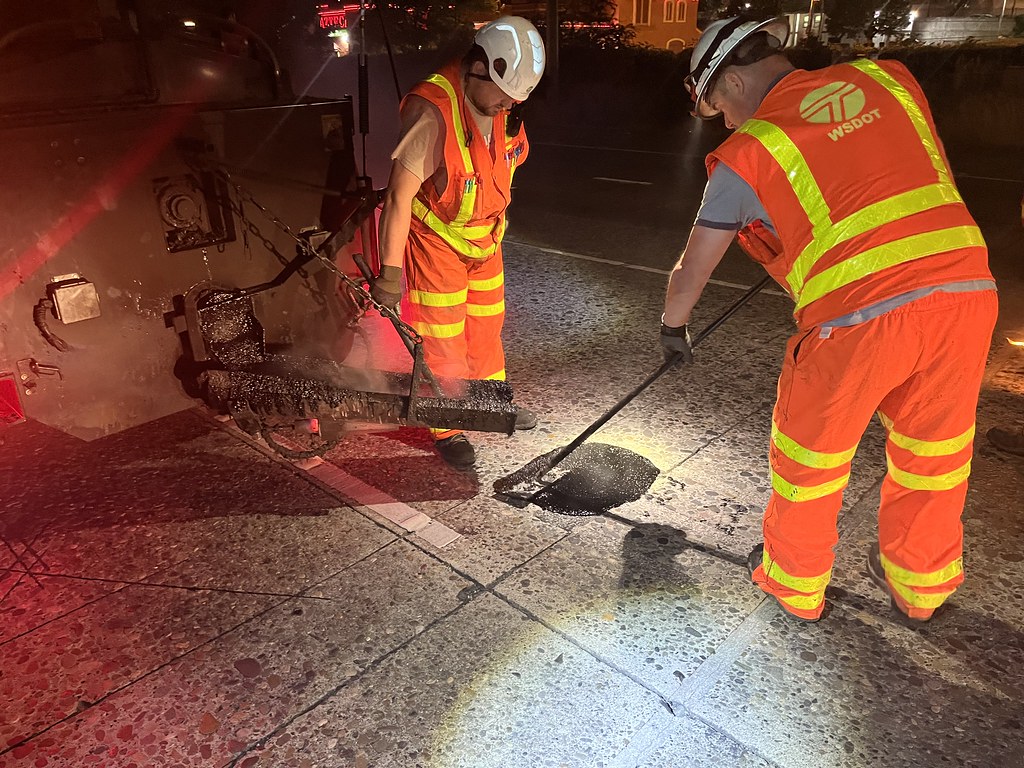
Delay changes the object
A maintenance backlog is often presented as a static list: a roof, a bridge joint, a lift, a drainage channel. But the item waiting in the list is not stable. Water spreads. Corrosion advances. A temporary patch changes how loads travel. A broken lift can turn an otherwise accessible route into no route at all. The cost of waiting is therefore not just the inconvenience experienced today. Delay can alter the eventual repair, the hazards people face and the services the asset can support.
The US Government Accountability Office defines deferred maintenance as the backlog that develops when available funding does not cover all needed work. Its 2024 review of public-land agencies found that project selection considered the risks of not acting in time, including safety threats; agencies also faced inflation and supply-chain constraints that raised costs and delayed work. The point is not that every city resembles a federal land agency. It is that “not repaired” is itself a managed condition with consequences, not an empty space between budget years. Read the GAO report.
Maintenance debt also grows in the gap between capital and operating decisions. A new building or redesigned square has a visible opening, a named budget and a photographable result. Inspection, cleaning, lubrication, repainting and component replacement are repetitive and easy to postpone. Yet an asset’s public value is delivered across its whole life, not on its opening day.
The OECD’s 2026 work on infrastructure asset management makes this lifecycle point explicit: condition, performance and long-term costs need to connect with planning, accountability and finance. Its Government at a Glance 2025 analysis found that only 12 of 33 countries with available information systematically included full lifecycle costs when appraising all projects, while many lacked comprehensive asset registers. The numbers describe national practices, not every municipality, but they expose a recurring institutional weakness: governments can be better at authorising assets than at sustaining them. Read the OECD working paper and the comparative findings.
A ledger, not a complaints map
Many public bodies already offer maps on which residents can report potholes, broken lights or damaged street furniture. Those tools are useful, but they usually record the public’s observations, not the authority’s reasoning. A cluster of pins can show where people complained. It cannot tell a resident whether the underlying asset was inspected, what condition standard applies, why one repair outranked another, or when a temporary measure will be reviewed.
A maintenance ledger would begin after triage. For a defined set of ordinary, non-sensitive assets, it would publish:
- the asset and service it supports;
- the observed defect and date of inspection;
- the current condition against a stated standard;
- the immediate effect on safety, accessibility and service continuity;
- the chosen response: repair, temporary mitigation, monitoring, replacement or no action;
- the reason and responsible authority;
- the next inspection or decision date; and
- where meaningful, a range for the expected cost of action and the likely consequence of delay.
The last field needs discipline. A precise-looking forecast can pretend to know more than engineers know. Uncertain costs should be shown as ranges with assumptions, and some consequences are better expressed as thresholds: another winter may require replacement rather than patching; repeated lift outages may make a building’s service inaccessible; water ingress reaching electrical systems would change the risk class. The ledger should reveal the causal model, not manufacture certainty.
Visibility can distort priorities
The strongest objection is that publication may make maintenance worse. Easily photographed defects could attract attention while hidden drainage, structural or electrical work remains urgent. Campaigns could overwhelm a rational programme. Detailed condition data about critical facilities could create security risks. Staff may spend scarce time defending estimates that change after inspection. And the public may read an entry as a promise when weather, procurement or newly discovered damage changes the plan.
Those are design constraints, not reasons for silence. The ledger should exclude sensitive assets and operational details. It should distinguish public reports from professional inspections. It should publish the criteria used to rank work—risk to life, accessibility, service criticality, rate of deterioration, cost escalation and distributional impact—without inviting a popularity contest. Each entry should state whether it is a commitment, an estimate or an observation, and changes should remain visible.
There is also a distributional problem. Reporting systems favour people with time, connectivity and confidence. Neighbourhoods with fewer reports can still contain more serious deterioration. A maintenance programme therefore cannot simply count complaints. It needs scheduled inspection and condition data, then a way to test whether delayed work falls disproportionately on people who rely most on public assets.
The UK’s 2026 terms of reference for a review of public-sector asset maintenance describe ageing infrastructure, under-prioritised investment, inconsistent practices and weak long-term planning, and connect delayed maintenance with service risk and higher lifecycle costs. Its scope is the government estate, but the transparency lesson travels: without consistent definitions and condition data, a backlog figure can be large yet still uninformative. Read the review terms.
Run a one-street maintenance ledger
A city does not need a perfect asset register before testing the idea. Choose one ordinary street, small park or public building for a six-week experiment. Include ten to twenty non-sensitive assets and use existing inspections rather than creating a parallel technical process. Publish the ledger fields above in a simple table. Invite residents, maintenance staff and accessibility organisations to examine three questions:
- Can someone understand why work was done, deferred or monitored?
- Does the stated priority reflect the whole service impact, including routes that disappear when one component fails?
- When an estimate changes, does the ledger show what new evidence changed it?
The test should measure more than page views. Count entries with a named condition standard, decisions with a next review date, changes whose reasons are recorded, and defects first found through inspection rather than public complaint. Ask staff whether the ledger duplicates work or improves handovers. Ask residents whether it helps them distinguish an unreported problem from a conscious, reviewable deferral.
A maintenance ledger will not create engineers, asphalt or money. Its value is more modest and more political: it makes the cost of waiting part of the decision. Once delay has a condition, a consequence and a review date, maintenance stops being what happens after public ambition. It becomes one of the ways a public institution keeps its promises.
Author
What concrete example would confirm or challenge this article?
Choose a reaction, write a comment, or ask your AI assistant to send a proposal for review. Comments are reviewed before publication.