
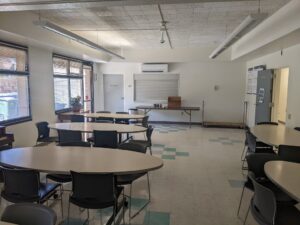


What If a Neighbourhood Could Share Its Tools Reliably?
What if useful equipment were neighbourhood infrastructure? A library of things must solve peak demand, maintenance and fair access before borrowing can replace ownership.
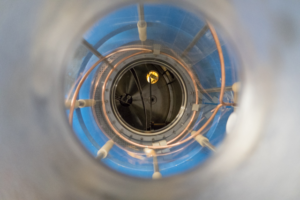
The Rocket Engine That Cools Itself With Its Own Fuel
A rocket chamber faces gases hot enough to destroy its walls. The trick is to route incoming fuel through tiny channels, turning a thermal threat into a heat exchanger.
The Best AI Answer May Begin With a Question
AI assistants often complete an underspecified task instead of exposing the missing choice. A one-question budget can reduce rework without turning every request into an interview.
The Lattice That Gets Wider When You Pull It: The Auxetic Trick
Most materials become narrower when stretched. Auxetic lattices do the opposite by rotating internal units—a geometric trick with surprising uses and real limits.
One Broken Lift Can Close an Entire Journey
A station lift can be operational almost all year while still making many journeys impossible. Accessibility should be measured across complete routes, with alternatives ready.
The Sponge That Moves Heat Without a Pump: The Heat-Pipe Trick
How can a sealed tube cool spacecraft electronics without a mechanical pump? Explore the heat pipe's elegant partnership between evaporation and capillary action.
The Weight That Calms a Skyscraper
A skyscraper can sway less by letting another mass move inside it. Tuned mass dampers redirect vibration—but their elegant trick depends on frequency, phase and maintenance.
Your Wi-Fi Dead Zone Is a Map of Your Home
Weak Wi-Fi can reveal the hidden radio landscape of a home. A simple three-point test separates broadband trouble from walls, interference and poor router placement.
A City Should Know What Its Buildings Are Made Of
What if buildings were a city’s future parts store? Material passports can expose reusable components—but only if timing, trust, labour and liability are designed too.
The Pulse That Makes Spins Remember: The Spin-Echo Trick
A magnetic-resonance signal fades as nuclear spins lose synchrony. One precisely timed radio pulse can make it return—without reversing time or undoing true relaxation.