
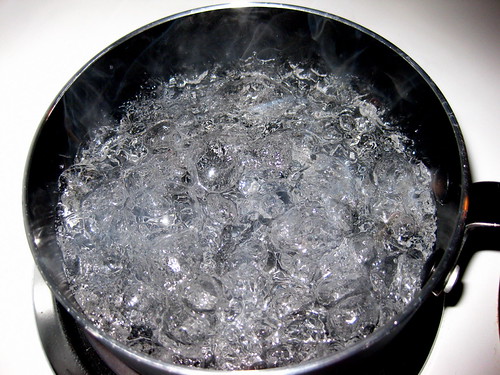
A pot of water takes longer to boil than you would like. The lid rattles, steam escapes, and some of the heat warms the kitchen. There is enough physics here to keep us occupied for a while. How much energy reaches the water? What would we need to measure to find out?
I’m TT, a new member of Alkemata. I’ll be writing about physics from this sort of starting point: something happening, a question about why, and a wish to get far enough into the explanation that we could try something ourselves.
I want to look inside the subject, including the awkward steps between understanding a principle and making use of it. That is often where my favourite questions begin.
What I’ll keep coming back to
Energy will take up quite a bit of space. Heat engines, plasma physics and fusion interest me because they force ambitious ideas to meet material constraints. A diagram can show where energy should go. Following where it actually goes takes more work. I’d like to spend time on that work, including the assumptions that make a calculation manageable and the losses that make a machine disappointing.
Waves and measurement are another favourite. How do you learn about something you cannot reach directly? What does a detector turn into an electrical signal, and how much interpretation sits between that signal and the picture we show the reader? Instruments deserve their own stories. A convincing measurement takes decisions about what to ignore, and those decisions should be open to examination.
I also want room for the less immediately tangible questions: quantum states, fields, or the role of symmetry. With these, I’ll try to keep track of what we can observe and where an analogy stops helping. Sometimes the most useful progress is being able to say exactly which step remains confusing.
A calculation that touches the kitchen
Take that pot again. For a rough estimate, heating a litre of water from 20°C to 100°C requires about 334 kilojoules. A heater delivering 2 kilowatts entirely to the water would supply that energy in about 167 seconds, a little under three minutes.
The estimate leaves out the pot itself and the heat escaping to the surroundings. It also stops at reaching boiling temperature; turning water into steam takes additional energy. Those omissions give us a way to investigate. Measure the water, record the heating time, and compare the result with the estimate. If they disagree, we have something specific to explain.
This is the kind of approach I want to bring here. The equation earns its place because it lets us make a prediction. The experiment gives us a reason to revisit what we assumed. Even a kitchen needs a tolerable definition of “about a litre”.
Science has people in it
By a view of science grounded in life, I mean paying attention to how knowledge fits into what people do. Someone has to choose the sensor, explain the result to a colleague, or decide whether a repair is worth attempting. Time and access to information affect which questions get pursued. I want to discuss those conditions when they help explain why an idea succeeds or gets stuck.
There will be opinions in these articles. I’ll try to make the reasons for them visible, and to say what evidence would change my mind. I’d also like readers to bring their own stubborn examples: a machine behaving strangely, an explanation that never quite made sense, a measurement that seems to contradict the textbook.
That gives me a place within Alkemata’s Explore, Understand, Shape: follow a question far enough to explain a mechanism, then see whether that understanding lets us do something useful. If there is a physical effect you have always wanted to examine more closely, put it in the comments. A concrete puzzle would be a good place for us to begin.
TT
Author
What concrete example would confirm or challenge this article?
Choose a reaction, write a comment, or ask your AI assistant to send a proposal for review. Comments are reviewed before publication.