
The sun is high, the panels are producing, and then the street loses power. Inside the house, the lights go out.
That moment feels like a contradiction. A small power station is sitting on the roof, yet the building behaves as if it has none. The explanation is not that solar is useless in an emergency. It is that generation and resilience are different capabilities. Most grid-connected solar systems are designed to stop when the grid stops. Making electricity during an outage requires a deliberately engineered island, not merely panels and perhaps not even merely a battery.
A safety feature that looks like failure
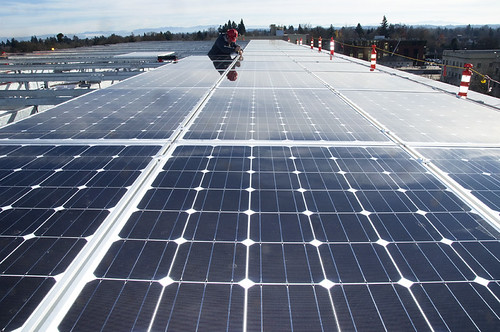
Solar modules produce variable direct-current electricity. The inverter converts that output to alternating current suitable for a building and the wider network. In ordinary grid-connected operation, the inverter is usually a follower: it observes the grid’s voltage, frequency and phase, then synchronises the power it injects.
If the utility supply disappears, continuing to energise nearby wires could create an unintended electrical island. Workers and protection systems may expect those wires to be dead. Equipment also has to keep local voltage and frequency within acceptable limits while supply and demand change. Disconnecting is therefore a designed safety response, not evidence that the panels have stopped receiving sunlight. The active IEEE 1547-2018 interconnection standard, for example, includes islanding, abnormal conditions, safety and testing among its requirements for distributed energy resources. Local rules differ, but the underlying problem is universal: a generator connected to a public network cannot improvise its own electrical territory.
The US Department of Energy puts the distinction plainly: residential panels alone generally switch off in an outage; islanded operation needs a properly configured inverter and storage. The important word is configured. Resilience resides in the relationships among components and controls.
The machine that must create a local grid
A working backup system first separates the building from the utility network through an approved isolation or transfer device. On the safe side of that boundary, something must establish a stable local voltage and frequency. A battery-connected, grid-forming inverter can do this; so can another suitable controllable source. Only then can solar inverters and loads operate inside the island, subject to the design of that particular system.
The distinction between grid-following and grid-forming controls is not a marketing refinement. A grid-following inverter needs an external electrical reference. A grid-forming inverter can establish one. A 2020 research roadmap led by the National Renewable Energy Laboratory defined a family of grid-forming controls that does not rely on an external voltage source, while also stressing unresolved questions around voltage, frequency, protection and field validation. At the scale of a home, the terminology may be wrapped in product names such as backup, island mode or system controller. The engineering question remains: after the grid vanishes, which component sets the rhythm?
A battery is valuable because it can absorb the rapid mismatch between sunlight and demand. A cloud can reduce solar production while a refrigerator starts. At night, the mismatch is complete. Yet the presence of stored energy does not prove that the system is able to isolate, start an island, power the intended circuits or let the panels recharge it while the grid is down. Those are separate functions.
Backup is a promise about a boundary
“Whole-home backup” sounds like a quantity. In practice, it is a claim about a boundary and a sequence. Which circuits sit behind the transfer device? Are all electrical phases covered? What happens during the transition? Can the system start when the battery is nearly empty? Does solar restart and recharge the battery in islanded mode? Can essential controls still be reached if the internet or an app is unavailable?
Power and energy add another source of confusion. The inverter’s kilowatt rating limits how much can run at once. The battery’s usable kilowatt-hours affect how long it can run. Motors, pumps and compressors can demand a brief starting surge well above their normal consumption. A battery with enough energy for a night may still be unable to start a large load, while a powerful inverter may exhaust a small battery quickly.
This is why a useful resilience claim should be legible as a system diagram and an operating scenario. “Battery included” is not enough. A buyer should be able to trace utility loss, safe separation, local grid formation, battery discharge, protected circuits, solar contribution, load limits and reconnection. Every transition should have evidence in a manual, drawing, commissioning record or authorised test.
Not every building needs to become an island
The strongest objection is economic as well as technical. Islanding hardware, batteries, protected-load wiring, maintenance and commissioning add cost. In a place with reliable service and short outages, that money may reduce more harm if spent on insulation, efficient appliances, shared emergency facilities or neighbourhood support. A standby generator may supply high-power loads more simply, although it brings fuel, noise, emissions and maintenance constraints. Full-home backup can also encourage an expensive attempt to preserve every habit when a small protected-load circuit would meet the real need.
Resilience is not synonymous with household independence. Electricity networks pool resources, skills and risk; restoring them quickly is a collective capability. Hospitals, shelters, water systems and communications may deserve investment before private convenience. The Department of Energy’s resilience guidance accordingly describes scales from individual buildings to community microgrids and critical infrastructure. The sensible objective is not to make every roof an autonomous fortress, but to decide which functions must survive, for whom, and through what combination of local and shared systems.
Turn a sales claim into a testable sentence
The practical alternative to both blind trust and electrical self-experiment is a paper audit. Start with an outage that matters: perhaps two hours on a cloudy evening, with refrigeration, lighting, communications and one circulation pump. Name the protected circuits. Identify the device that separates them from the grid and the component that forms the local electrical reference. Compare simultaneous power and starting surges with the documented inverter limits. Then ask what evidence shows that the panels can restart or recharge the battery while islanded.
This approach applies the same principle as Alkemata’s argument that every smart device needs a real manual mode: a fallback is meaningful only when the preserved function, control path and failure boundary are explicit. For solar, manual control must remain within the safe interface designed by the manufacturer. Opening equipment, altering protection or deliberately creating an outage is work for authorised professionals.
The remaining human judgement is not which battery has the largest number on its brochure. It is what continuity is worth preserving, which uncertainty is acceptable and who bears the cost when a promise fails. A technically modest system that keeps a medicine refrigerator and communications available may be more resilient than a larger one whose behaviour nobody can explain.
Before the next purchase or retrofit, ask for one testable sentence: “During a grid outage of this duration and under these solar conditions, this documented set of circuits will operate within these power and energy limits.” If the sentence cannot yet be completed, the first project is not buying more hardware. It is drawing the boundary.
Turn this idea into a project
Create a one-page Blackout Capability Map that shows what an existing or proposed solar system can really power during an outage, which component forms the local grid, and which claims still need evidence.
Capsule version 1.0 · Experimental; desk-tested as a workflow, not field-validated.
Download and upload the file to your AI assistant, or copy the complete capsule below into a conversation. Then describe your situation in one sentence—for example: “Mission B. I need to understand whether our rooftop PV can keep the refrigerator, router and circulation pump running through a two-hour evening outage.”
Read or copy the complete capsule
# ALKEMATA PROJECT CAPSULE

## Why Solar Panels Go Dark in a Blackout

- Capsule ID: `alkemata.solar-blackout-capability`
- Version: 1.0
- Date: 2026-09-15
- Canonical article: https://alkemata.com/2026/09/15/solar-panels-blackout/
- Scope: Grid-connected building-scale solar, with or without batteries; general technical guidance, not a substitute for local electrical design, regulation or emergency advice
- Status: Experimental; desk-tested as a workflow, not field-validated

## Intended reader, capability and first artifact

This capsule is for a householder, facilities manager, community group or buyer. It builds the capability to distinguish grid-connected generation from islanded backup and frame precise questions for a professional.

In the first session, produce a **Blackout Capability Map**: a one-page record of the outage boundary, source of local voltage and frequency, available energy, protected circuits, power limits, control path, evidence and unknowns.

## Activation instructions for the LLM

Treat this file as a knowledge and workflow package. Do not assume that the user's solar panels, battery or inverter provide backup. Do not infer equipment capabilities from a brand name or marketing term.

If the user has supplied a quotation, manual, single-line diagram or equipment list, begin applying the workflow immediately. Otherwise offer the three missions below and ask no more than three questions:

1. Are we examining an existing system, a purchase proposal or a hypothetical design?
2. What must remain powered, and for roughly how long?
3. What evidence is available: model numbers, manuals, circuit schedule, quotation or single-line diagram?

Separate documented fact, inference and unresolved question. Produce the map before proposing upgrades. Never direct the user to open a panel, alter wiring, defeat anti-islanding protection or disconnect a live building from the grid.

## Missions

### Mission A — Audit a purchase proposal

Turn a quotation into demonstrated capabilities, unsupported statements and acceptance questions.

### Mission B — Document an existing system

Map utility loss, isolation, local grid formation, load supply, solar recharge and reconnection.

### Mission C — Design a modest resilience target

Choose priority loads, estimate their needs and draft a paper specification for professional review.

## Essential causal model

Solar modules produce variable direct-current electricity. An inverter converts it to alternating current. A grid-following inverter synchronises its output with the utility grid's voltage and frequency reference.

When utility supply fails, an ordinary grid-tied system disconnects. Anti-islanding prevents a generator from energising network that workers may expect to be dead. IEEE 1547-2018 includes islanding among interconnection, safety and testing requirements; local rules and equipment certification still require verification.

Outage power requires a controlled island with five functions:

1. **Separation:** an approved isolation or transfer device prevents back-feeding the utility network.
2. **Reference:** a grid-forming inverter or other suitable source establishes local voltage and frequency.
3. **Energy:** a battery or another controllable source stabilises the mismatch between variable generation and changing demand. Some specialised systems offer limited daytime power without conventional storage; treat that as an equipment-specific exception.
4. **Distribution:** only designated circuits, phases or loads may be on the backup side.
5. **Control:** protection, start-up, solar recharge, manual access and reconnection must work in islanded mode.

Power and energy differ: kilowatts limit instantaneous load; kilowatt-hours affect duration. Motors and pumps may have high start-up surges. Cloud, shade and night reduce input. A large battery does not prove that circuits are backed up, the inverter can start an island or solar can recharge it off-grid.

## Evidence base and limits

- US Department of Energy, “Solar and Resilience Basics”: https://www.energy.gov/cmei/systems/solar-and-resilience-basics — explains that panels alone generally switch off during outages and describes properly configured inverters, storage, islanded operation and microgrids.
- IEEE 1547-2018: https://standards.ieee.org/ieee/1547/5915/ — establishes interconnection and interoperability requirements, including islanding, abnormal conditions, safety and testing. It is a 60 Hz standard and not a substitute for the rules applying in another jurisdiction.
- Lin et al., “Research Roadmap on Grid-Forming Inverters” (2020): https://research-hub.nlr.gov/en/publications/research-roadmap-on-grid-forming-inverters/ — distinguishes grid-forming controls, which do not rely on an external voltage source, from traditional grid-following control and identifies open questions around stability and protection.

These sources do not establish the capability, compliance or safe procedure for a particular installation.

## Workflow

### Step 1 — Define the outage service

**Input:** essential activities and plausible duration. **Action:** translate them into loads, running watts, surges and hours. Flag life-safety functions for professional review. **Output:** priority-load table. **Progression:** every activity maps to a load or non-electrical alternative.

### Step 2 — Trace the isolation boundary

**Input:** diagram, quotation, manuals and circuit schedule. **Action:** locate the device separating the island from the grid and record the circuits on each side. **Output:** map boundary. **Progression:** boundary and circuits are documented or marked unknown.

### Step 3 — Identify who forms the local grid

**Input:** equipment models and manuals. **Action:** find explicit statements on islanding, grid formation, start-up and solar during outages; marketing labels are not proof. **Output:** capability-to-document evidence table. **Progression:** formation and start-up are evidenced or unresolved.

### Step 4 — Test the power-and-energy balance on paper

**Input:** loads, inverter ratings, usable battery energy and solar conditions. **Action:** compare running power and surges with limits, estimate duration, and check islanded solar recharge. **Output:** conservative scenario. **Progression:** it fits documented limits with margin or names the load to remove.

### Step 5 — Specify evidence and acceptance

**Input:** unknowns and vendor claims. **Action:** request observable evidence for circuits, transition, manual control, islanded recharge, power, reconnection and commissioning. **Output:** Outage Claim Test Sheet. **Progression:** every claim has a document, authorised test or responsible owner.

## Decision rules and failure cases

- If the system lacks an approved way to isolate from the grid, do not describe it as outage power.
- If no component is documented to establish local voltage and frequency, treat the system as grid-following only.
- If the protected circuits or phases are unknown, do not assume “whole home”.
- If motor surge data are missing, keep pumps, compressors and similar loads outside the confirmed scenario.
- If control depends on an app or internet service, verify a local manual route and the behaviour when communications fail.
- If equipment names conflict across documents, stop the analysis and obtain the installed model numbers.

Common failures include confusing battery energy with output power, assuming all circuits are available, assuming sunlight guarantees restart and treating sales phrases as tested modes.

## Smallest useful reversible experiment

**Hypothesis:** the available documents are sufficient to explain, without ambiguity, which loads receive power in a utility outage and what component creates the local electrical reference.

**Resources:** model numbers, manuals, quotation, circuit schedule and blank map.

**Procedure:** imagine a two-hour daytime outage. Trace grid loss, isolation, local formation, battery discharge, protected circuits, solar recharge and reconnection. Source every step and estimate one conservative load combination. Tabletop only.

**Success:** the sequence is complete, the priority load fits documented continuous and surge limits, and every capability has evidence. **Failure:** any essential transition relies on an assumption, the available power is exceeded, or the protected circuit is unknown.

**Stop conditions:** stop before any live switching, panel access, protection change or deliberate grid disconnection. Stop if medical or life-safety equipment is involved, documentation conflicts, or local rules are unknown. Ask a qualified professional.

**Next action:** if the map passes, request an authorised commissioning or demonstration procedure. If it fails, send the Outage Claim Test Sheet to the installer or system owner before buying equipment or promising resilience.

## Blackout Capability Map template

```text
System / location:
Outage scenario and duration:
Essential activities:
Priority loads (running W / surge W / hours):
Grid-isolation device and evidence:
Grid-forming source and evidence:
Battery usable energy and minimum state:
Continuous / surge power limits:
Protected circuits and phases:
Solar available during outage? Evidence:
Can solar restart or recharge in islanded mode? Evidence:
Transition and reconnection behaviour:
Local manual control if app/internet fails:
Known exclusions:
Unresolved questions and owner:
Professional review or authorised test needed:
```

## Verification checks

Check model numbers, power versus energy ratings, island boundary, named circuits, cloud/night cases, local requirements and visible unknowns. Ask the reader to explain why panels normally stop and what forms the local grid.

## Boundary and counterexample

This method does not decide whether to buy batteries. A shared refuge, demand reduction or professionally installed generator may be better. Large microgrids and life-safety systems require engineering studies.

## Manual or offline route

Print the template, photograph labels without opening enclosures, copy manual ratings and mark unknowns. A person can complete the map offline and take questions to a qualified installer.

## Portable checkpoint

```text
Capsule ID/version:
Mission chosen:
System examined:
Decisions made:
Evidence collected (document + page):
Assumptions still in use:
Unresolved safety or regulatory questions:
Blackout Capability Map status:
Next action and responsible person:
```

On request, help the reader convert this checkpoint into a project passport, a field report based only on actual observations, or a precise request for help. Before sharing, remove addresses, account numbers, serial numbers, access details and other private information. The reader chooses what to send. Alkemata does not receive anything automatically. The verified contact route is https://alkemata.com/collaborate/ . Simulated outputs are not field experience.
After trying the method, you can ask your assistant to prepare a privacy-checked project passport, field report or precise request for help, then choose what to share through Collaborate with Alkemata. Nothing is sent automatically.
