
A bag of frozen berries is opened and its corners are filled with pale crystals. The fruit has dull patches and tastes dry after thawing. Nothing has warmed enough to cook it, yet part of it looks as though the cold has burned it.
Freezer burn is a misleading name. The freezer has not scorched the food. Water has left exposed parts of the food while it remained frozen, and oxygen has continued to alter pigments and fats. The result is a quality problem—dryness, toughness, colour change and stale flavours—not, by itself, proof that the food is unsafe.
Ice can leave without melting
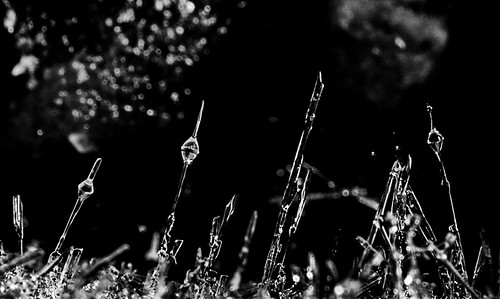
We tend to imagine frozen water as immobile. At household freezer temperatures, however, some water molecules still escape from the surface of ice into the air. This direct change from solid ice to water vapour is called sublimation. In an open or poorly sealed package, the vapour can move away from the food and later settle as frost on a colder surface.
The mechanism depends on gradients. Water vapour moves from a place where its partial pressure is higher towards one where it is lower. The exposed surface of frozen food supplies vapour; circulating cold air carries it away; colder coils, walls or packaging surfaces can collect it. A piece of meat or bread can therefore lose moisture even though the freezer remains well below 0°C.
The US Department of Agriculture describes freezer burn as air reaching the food surface and producing dry, leathery areas. The important word is surface. A loose bag does not merely contain “extra cold”. It contains a volume of air into which moisture can escape, and its imperfect seal allows repeated exchange with the freezer.
Oxygen adds a second pathway. Exposure can oxidise fats and pigments, producing off-flavours and colour changes. The University of Minnesota’s home-freezing guidance therefore recommends airtight, moisture-resistant packaging and removing as much air as practical. Tight contact reduces both the vapour space and oxygen available at the surface.
Why frost may be evidence of movement
Ice crystals inside a package do not all mean the same thing. Some water may have been present on the food when it was packed. Warm food can release vapour before it freezes. A damaged seal can admit humid room air. Temperature fluctuations can also move water: a warmer surface releases more vapour, which can redeposit when another surface becomes colder.
This is why a frost-covered bag is evidence to investigate, not a complete diagnosis. The food may be dehydrating, but the crystals could also come from condensation introduced during packing. Look for the combination: dry or discoloured exposed areas on the food, loose packaging, visible air pockets and increasing frost elsewhere.
Temperature stability matters because small warming and cooling cycles redistribute ice. Opening the door, loading a large amount of unfrozen food or storing a package near a frequently warmed front edge can create changing gradients. The Minnesota guidance notes that fluctuating temperatures can lead to thawing and refreezing and larger ice crystals. Those crystals damage texture differently from surface freezer burn, but the two problems can occur together.
Safety and quality are different questions
The strongest correction to the mechanism is practical: an unattractive frozen item is not automatically dangerous, and an attractive one is not automatically safe. According to the US Food and Drug Administration, food properly handled and stored at 0°F (−18°C) remains safe, although its quality declines with time. Freezer burn itself is a quality defect.
That distinction should not become permission to ignore the cold chain. Freezing stops most bacterial growth but does not reliably kill all microorganisms. If perishable food has thawed or spent too long above safe temperatures, appearance and smell cannot settle the safety question. Follow the product’s instructions and the relevant food-safety guidance; when the history is uncertain, do not use “it only looks freezer-burned” as reassurance.
Packaging choices also have limits. Removing air is useful, but improvised vacuum storage is not automatically appropriate for every food or every thawing method. Use packaging intended for freezing, respect headspace where liquids expand, and follow the equipment and food instructions. The goal is not maximum compression at any cost. It is a stable barrier that keeps moisture and oxygen from moving freely.
A two-package freezer test
The mechanism can be tested without sacrificing a large meal. Take two similar slices from the same loaf of bread. Label two freezer-safe bags with the date. In the first, press the bag gently around the slice and expel most of the air before sealing. In the second, leave a visible air pocket but seal the bag normally. Do not puncture either bag and do not add water.
Place the bags side by side in the same part of the freezer so temperature is the main shared condition. Photograph both at the start. After one and two weeks, inspect them briefly without leaving them to thaw: note frost on the bag, pale dry patches and whether the packaging still touches the bread. If a kitchen scale reliably reads to one gram, weigh each sealed bag at the start and end, but do not expect a dramatic difference; much of the water may have moved within the package rather than escaped it.
After the final observation, thaw the slices in their closed bags so condensation is not confused with moisture originally retained by the bread. Compare flexibility, crumb texture and dry edges. This is a qualitative household experiment, not a calibrated shelf-life study: two slices cannot establish a universal storage time, and different foods contain different structures, fats and dissolved substances.
The useful result is a packaging rule for the household. For foods that tolerate it, divide them into portions, use freezer-rated containers or bags that fit closely, remove unnecessary air, label the date and store them where temperature is stable. A small inventory prevents forgotten packages from becoming an archaeological layer.
Freezer burn becomes easier to prevent once it is seen as transport rather than damage by “too much cold”. Water can leave the food, oxygen can remain beside it, and cycling temperatures can move ice from one place to another. The next time frost appears inside a package, the worthwhile question is not simply how long it has been frozen, but where the water came from—and what path the packaging allowed it to take.
Author
What concrete example would confirm or challenge this article?
Choose a reaction, write a comment, or ask your AI assistant to send a proposal for review. Comments are reviewed before publication.