
A facilities manager walks through a room due for refurbishment. The partition wall will go. So will the doors, ceiling tiles, lights and carpet squares. On a drawing, they are lines and symbols. On a waste invoice, they become tonnes and charges. In between, they briefly exist as something more useful: a small store of components that another project might need.
That interval is usually too short. By the time anyone knows what is available, the demolition crew has a deadline, the next buyer has not been found, and nobody can confidently answer the questions that make reuse possible: What is it? How was it fixed? What condition is it in? Is there evidence that it can safely perform again?
Here is the larger proposition: a city should know what its buildings are made of, not as a perfect digital twin of every screw, but as a working inventory of components likely to become available. Buildings would become time-shifted material banks. Planning and procurement could look ahead, matching tomorrow’s doors, beams and raised-floor panels with projects that will need them.
This is an idea worth pushing to its limit because the limit reveals the real problem. The hard part is not making a database. It is organising trust, timing and responsibility around physical things.
Where value disappears
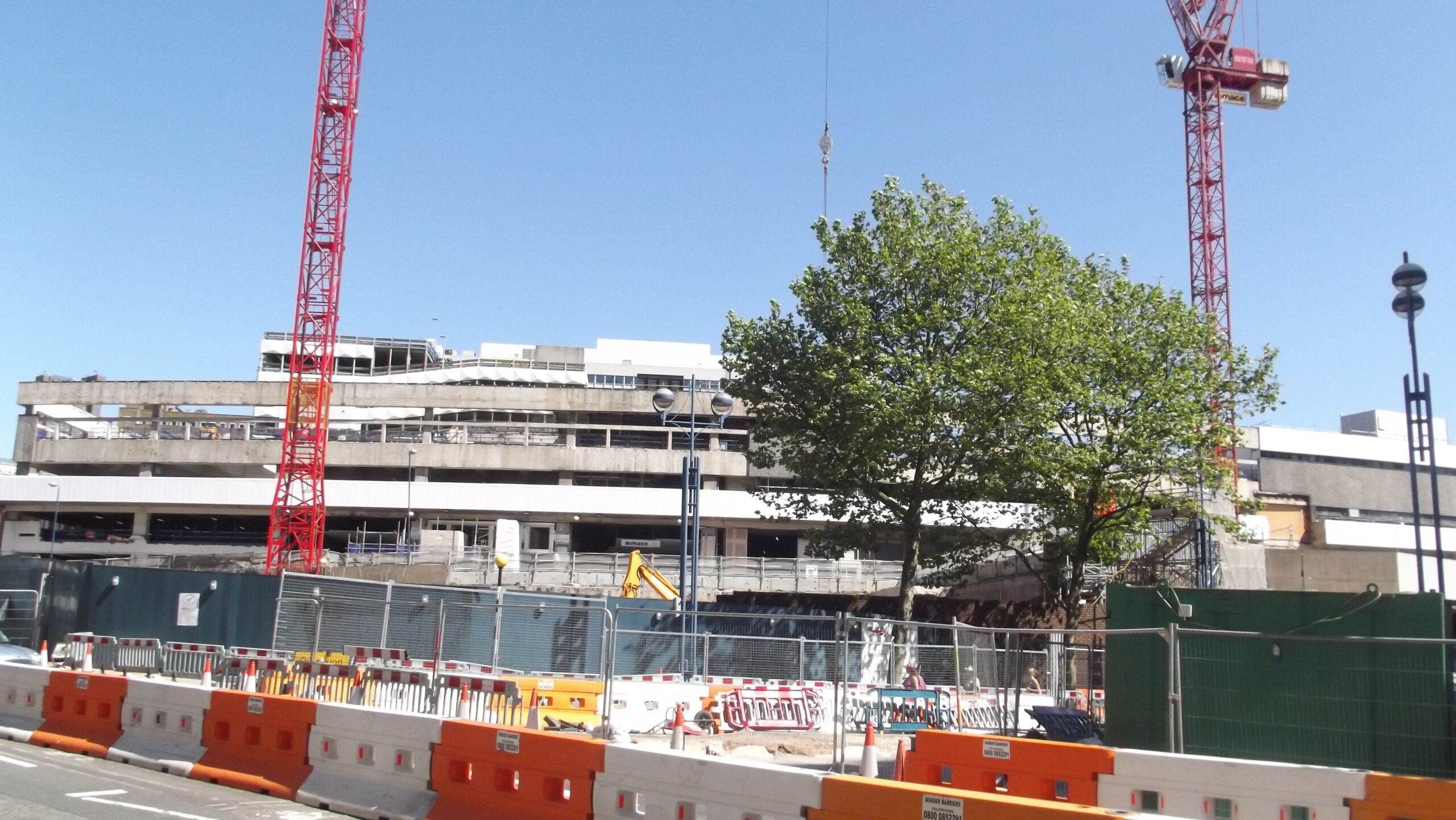
Construction and demolition waste accounts for more than a third of all waste generated in the European Union. That number is startling, but it can also mislead. “Recovery” may mean crushing concrete for aggregate or using material in lower-value applications. Those routes matter, yet they preserve far less of the labour, precision and energy already embodied in a finished component than reuse does.
A door is a useful example. Installed in a building, it is a manufactured product with dimensions, fire or acoustic properties, hinges, hardware and a maintenance history. Removed carelessly, separated from its records and mixed into a skip, it becomes an awkward object of uncertain quality. Nothing chemical has changed. Information, condition and context have.
Four losses happen together.
First, identity is lost. Product markings may be hidden, drawings outdated and maintenance records fragmented. A future user cannot distinguish a suitable component from a liability.
Second, condition is lost. A component designed for disassembly can survive removal; one glued, foamed or cast into surrounding work may not. Selective removal needs time, access and skilled labour.
Third, timing is lost. Supply appears when one project strips out a building, while demand belongs to another project’s programme. If those calendars miss each other, storage becomes the expensive bridge.
Fourth, confidence is lost. Architects, contractors, insurers and building-control authorities need evidence. Who warrants a reused component? What must be tested? Who is liable if it fails?
A material passport addresses the first loss by linking a product or component to structured information. Europe’s revised Construction Products Regulation introduces a digital product passport for construction products, with machine-readable information intended to follow a product through its life cycle. The transition will be gradual, product family by product family. It is an important infrastructure layer, not an instant catalogue of everything already standing.
Push the passport to city scale
Now extend the idea. Imagine that major renovation and demolition applications include a pre-demolition audit in a common format. Components do not enter a public exchange only after removal. They appear months ahead as forecast supply: 180 internal doors available in March; 600 square metres of raised flooring in May; steel members pending verification in July.
Public and private clients could query this forward inventory while designing new work. A school refurbishment might reserve sinks from an office conversion. A housing project might alter non-critical dimensions to accept available doors. Deconstruction contractors could plan removal methods around confirmed demand. Temporary storage hubs would handle the smaller share that had a credible user but an imperfect timetable.
The city would not need to own every component. Its useful role would be to set the grammar and connect existing decisions: permits create notice; audits describe supply; procurement creates demand; testing establishes confidence; logistics moves the object. The database is the thin visible layer over that institutional machinery.
This is not wholly speculative. The EU-funded Buildings as Material Banks project, which ran from 2015 to 2019, developed material-passport and reversible-building approaches and tested them through pilots. The European Commission’s updated construction and demolition waste protocol, published in August 2024, also treats pre-demolition and pre-renovation audits as practical tools for improving trust in recovered material. The pieces exist. The radical step is to make them interact as a local market before materials become waste.
The difficult ledger
The strongest objection is that a comprehensive inventory could cost more to maintain than it saves. Buildings change continuously. A pristine passport becomes stale after an undocumented repair. Older buildings begin with missing records. Detailed data can expose security-sensitive layouts or commercially valuable asset information. Small owners may face administrative work that large property groups can absorb.
There is also a danger of mistaking records for circularity. A tagged beam does not remove itself, prove its strength, find a buyer or arrive when needed. Transport, cleaning, testing and storage can erase environmental and financial gains. Some materials are contaminated; the Commission notes that mixed construction waste can contain hazardous substances such as asbestos and solvents. A reuse policy that rewards tonnes diverted without considering safety or retained value would create the wrong incentives.
So the inventory should be selective and event-driven. Require more detail when a building is built, substantially renovated or prepared for demolition, rather than demanding an immediate survey of every existing property. Record confidence and uncertainty explicitly. Restrict sensitive fields while publishing the information needed for matching. Let component classes carry different evidence rules: furniture may need condition grading, a fire door traceable certification, and a structural member inspection and testing by competent professionals.
Responsibility must travel with the record. The party making a claim should be identifiable; later inspections should add evidence rather than overwrite history. Workers doing careful removal need time, training and a share of the value created. Otherwise “circularity” becomes an instruction to do slower, riskier work inside an unchanged demolition budget.
Access matters too. If only major contractors can read or contribute to the inventory, it may become a private efficiency tool rather than civic infrastructure. Repair enterprises, salvage yards, community organisations and small practices need usable interfaces and proportionate rules. Public procurement can help by asking designers to check available stock and explain when it is unsuitable, creating dependable demand without forcing unsafe reuse.
Work backwards to one room
A city-scale inventory is too large to begin as a city-scale software project. The first useful experiment fits inside one planned refurbishment.
Choose a room that will change, and make a non-destructive recovery audit of ten to twenty components. Record dimensions, material, visible condition, attachment method, available documentation and the date the item is expected to become available. Give each item one of five provisional destinations: reuse in place; direct reuse elsewhere; reuse after testing or refurbishment; material recycling; or unknown and potentially unsafe.
Then add the fields that ordinary asset registers omit. Who could use it next? What decision date do they face? How many minutes might careful removal take? Where would the component wait? What evidence would the recipient require? Do not disturb structural, electrical or potentially hazardous materials; those judgements and removals belong to qualified professionals.
Hand the inventory to someone who did not make it. Ask them to identify one plausible next use and every unanswered question that prevents commitment. The experiment succeeds if one component reaches a credible next destination—or if it exposes a specific bottleneck, such as certification, removal labour or a six-week timing gap. Either result is more valuable than a polished dashboard with no transaction behind it.
The city-scale version begins there: not with the fantasy that every building becomes a perfect database, but with a repeatable record that survives a change of hands. The next time a room is stripped out, the practical question is no longer simply what can be recycled. It is what must remain known, intact and trusted for somebody else to build with it.
