
Imagine two houses built in 1930. In one, the sitting room stays comfortable with broad radiators carrying moderately warm water. In the other, a small radiator beneath a window needs very hot water on a cold evening. Their dates are identical, but they present very different jobs to a heat pump.
This is why “Is my house too old for a heat pump?” is usually the wrong first question. Age can hint at insulation, leakage and construction, but a heat pump does not read the date above the door. It experiences temperatures, heat losses, flow rates and controls. The more useful test is whether the building can deliver the heat each room needs without forcing the machine to maintain unnecessarily high water temperatures.
The surprising consequence is practical: one undersized radiator can matter more than a broad judgement about the whole house. Before replacing every window or rejecting a heat pump outright, find the rooms that set the temperature requirement.
The machine is moving heat uphill
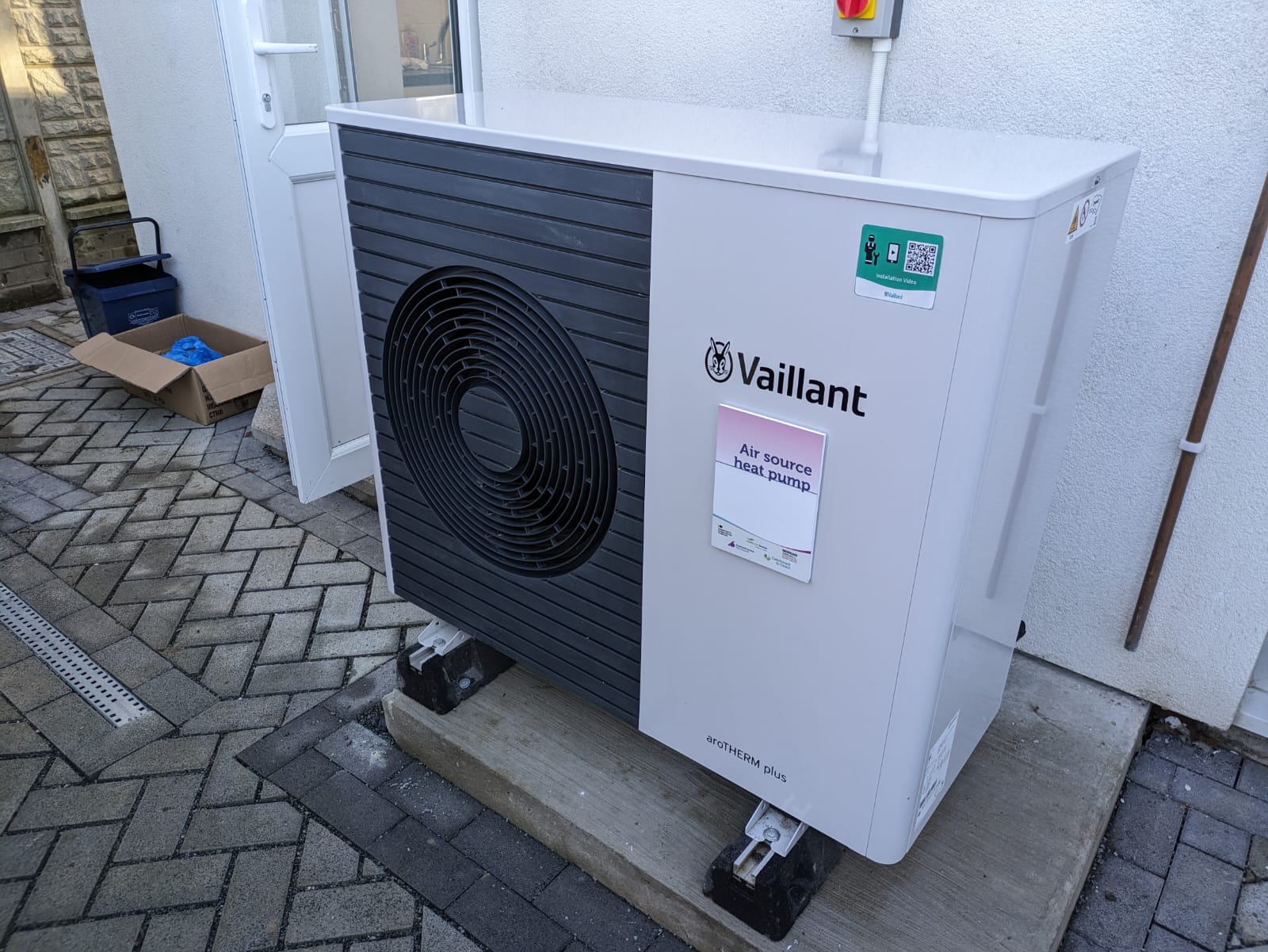
An air-to-water heat pump collects heat from outdoor air, raises its temperature through a refrigerant cycle and transfers it into the water circulating through radiators or underfloor pipes. Electricity mainly drives the compressor and auxiliaries; it is not converted into heat in the same way as an electric resistance heater. This is how one unit of electricity can deliver several units of heat.
The coefficient of performance, or COP, is the heat delivered divided by the electricity used over a stated operating condition. A COP of three means three units of heat for one unit of electricity during that measurement. A seasonal performance factor applies a similar ratio over a much longer period and includes the changing weather and operating modes defined by the measurement boundary.
Neither number is a permanent property of the box. The compressor has an easier task when the temperature difference between the heat source and the heating water is small. As outdoor air gets colder or the required water temperature rises, the machine must create a larger temperature lift. Its efficiency and sometimes its available heating capacity fall. Defrost cycles, pumps, controls and backup heating can also affect whole-system performance.
That makes the heating-water temperature a powerful design variable. A large radiator can transfer the required heat to a room at a lower water temperature than a small one, all else equal. Underfloor heating spreads the exchange over an even larger area, but it is not the only route to low-temperature operation.
What the field data actually show
A completed Fraunhofer ISE field project monitored 77 commercially available heat pumps in German homes, with buildings dating from 1826 and renovation levels ranging from largely original to extensively refurbished. The main 2024 evaluation found seasonal performance factors of 2.6 to 4.9 for 49 air-source systems, with an average of 3.4. Thirteen ground-source systems ranged from 3.6 to 5.4.
Most relevant here, the researchers found no correlation between building age and heat-pump efficiency in their sample. They explain this by the similar space-heating temperatures measured across construction periods. The result does not prove that age or insulation never matters. It shows that age alone did not predict measured performance within this particular pool, which was not a random sample of every German house.
The associated November 2025 project summary adds an important detail: adequately sized radiators in the study could operate at similarly low temperatures to underfloor heating. It also reports optimisation problems. Many systems were oversized relative to consumption; some switched on and off too frequently; and some combined stores failed to keep space-heating and domestic-hot-water temperature levels properly separated.
These are system findings, not a promise that any heat pump will work well in any old building. The monitored pre-1977 buildings were more extensively renovated than the national average. The observation period was comparatively mild, and the researchers say that this helped keep electric backup use low. Product selection, hydraulic design, commissioning, climate, household temperatures and hot-water demand still matter.
The coldest room can govern the system
Suppose most rooms can meet their design heat loss with 45°C water, but a corner room with two external walls needs 60°C because its radiator is small. If the entire heating circuit is operated at the higher temperature for that room, the compressor faces the larger lift everywhere. The bottleneck is local; the penalty can become system-wide.
A room-level heat-loss calculation and an emitter-capacity check can reveal that constraint. A peer-reviewed Fraunhofer meta-analysis of multifamily field data likewise identifies source and supply temperatures as central performance factors, and notes that replacing individual bottleneck radiators can lower required heating temperatures. The answer might be a larger radiator, an additional emitter, a fan-assisted low-temperature radiator, reduced heat loss in that room, or a different circuit design. It might also show that several rooms or the building envelope need substantial work. The value lies in replacing a binary verdict—old house, yes or no—with a map of specific requirements.
This is the same engineering lesson explored in Frontier Engineering Often Fails at the Joint: overall performance often depends on interfaces. Here the important joints are between the building fabric, each room’s emitter, the hydraulic circuit, the controls and the heat pump.
The serious counterargument: heat loss is still real
Focusing on radiators must not become an excuse to ignore the envelope. If heat escapes quickly through roofs, walls, windows and uncontrolled air leakage, the system must supply more heat. That can require a larger heat pump, larger emitters, higher electricity use and more demanding electrical or acoustic arrangements. Insulation and draught reduction can improve comfort while reducing the required plant size.
Nor should “low flow temperature” become a target pursued without context. A house that fails to reach safe, comfortable temperatures has not passed. Domestic hot water has separate hygiene requirements and should not be casually adjusted as part of a space-heating experiment. Noise, condensate drainage, outdoor-unit placement, defrost behaviour, peak electrical demand and resilience during faults also belong in a proper design.
The right conclusion is narrower: a building’s date is insufficient evidence, and wholesale renovation is not automatically a prerequisite. Measure the actual constraints, then decide which improvements are worthwhile.
Build a temperature bottleneck map
A useful first project can be completed before choosing a manufacturer. Draw one row for each heated room. Record its approximate dimensions, external walls and windows, current radiator type and size, normal set temperature, and whether it is slow to warm or routinely needs a hotter setting. Add known insulation and draught issues. Mark the room that struggles first in cold weather.
Then gather evidence already available: past fuel or heat consumption, boiler flow-temperature settings, heating schedules and any commissioning documents. If the heating controls expose flow and return temperatures, record them during normal operation without opening equipment. Avoid changing protected settings, disabling backup systems or using a short warm spell as a substitute for winter design conditions.
Ask a competent designer or installer to add the calculations you cannot safely infer: room-by-room design heat loss, emitter output at proposed flow and return temperatures, hydraulic balancing requirements, design outdoor temperature, heat-pump capacity across relevant conditions, expected seasonal performance and backup strategy. Quotations should state these assumptions rather than offering only a model number and a headline power rating.
The map creates several testable pathways. If one room is the bottleneck, compare the cost of improving that emitter with raising the whole system temperature. If many rooms are marginal, compare targeted insulation, emitter replacement and alternative heat distribution. If the proposed unit is much larger than the calculated load, ask how minimum modulation and cycling will be managed. If domestic hot water drives the highest temperature, ask how storage and control keep that demand from unnecessarily raising the space-heating circuit.
For a wider view of heat sources and temperature levels, Alkemata’s exploration of recoverable urban heat shows why temperature, distance and system boundaries matter beyond a single house.
The next useful decision is not whether an old building belongs in a permitted category. It is whether you can name the room, temperature and operating condition that set the hardest requirement. Once the bottleneck is visible, “heat-pump readiness” becomes an engineering problem that can be improved, costed and checked.
