
A kettle clicks off too early. A desk lamp flickers. A coffee grinder still turns, but only when its cable sits at a particular angle. In each case, the suspected part may cost very little. The repair can still fail before anyone reaches it.
A screw head is hidden under a label. Two shell halves are held by clips whose direction is invisible. A battery is glued beneath a board that must be removed first. The object’s price suggested simplicity; its route inward reveals a maze.
What if products had to declare that route in minutes?
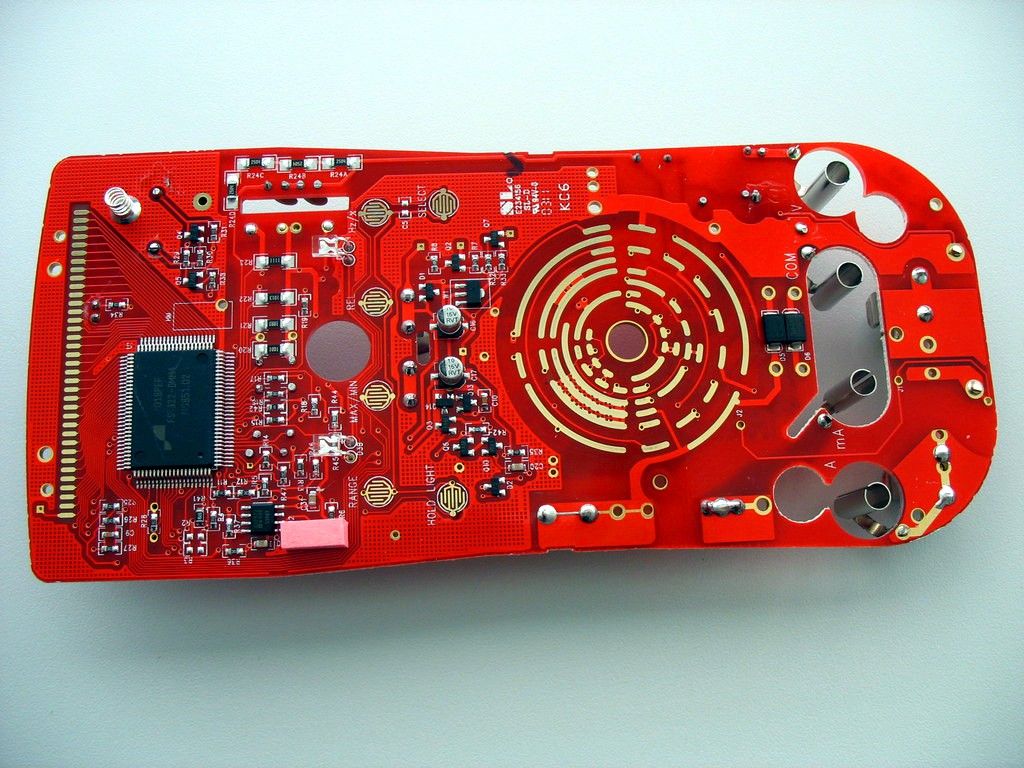
A public disassembly time could make a neglected part of repair visible: not whether a component can theoretically be replaced, but how much skilled attention it takes to expose it without damaging the product. Used carefully, the measure could reward direct access, reusable fasteners and coherent instructions. Used carelessly, it would become another confident number that hides the reasons repair succeeds or fails.
Time is where design becomes cost
Repair is an economic decision made under uncertainty. Before diagnosing a fault, a technician may need to search for instructions, identify fasteners, arrange tools, release clips and keep track of parts. Labour accumulates while the product still looks almost unchanged. If opening a low-cost appliance consumes most of the price a customer is willing to pay, replacing it can seem rational even when the failed component is cheap.
This is why access time matters. It translates small design choices into somebody’s bill. Three screw types require three tool changes. A hidden clip adds caution because a broken housing may end the job. Adhesive turns a reversible action into a bet. The location of one frequently failing part can matter more than how elegantly the rest of the product was assembled.
The idea is not purely speculative. A European Commission Joint Research Centre study developed an ease of Disassembly Metric expressed as estimated time for partial or complete disassembly. Its method derives time from observable actions such as handling, tool use and disconnecting fasteners. A later JRC circular-products study identifies disassembly depth, sequence, time and fastener characteristics as information useful to repairers and consumers, while noting that a maximum time is technically difficult to define.
That difficulty is not a reason to ignore time. It is a reason to expose the test.
Push the label to its limit
Imagine that a product page did not stop at “repairable”. It showed a short access table: battery, four minutes; power board, twelve; pump, twenty-three. Each time would refer to a named part, a defined toolkit, published instructions and non-destructive removal. Procurement teams could compare models on the components that matter in their use: a school might prioritise keyboard and charging-port access, while a café might care about pumps, switches and seals.
Design incentives would move upstream. Engineers could see the cost of routing a cable behind three assemblies or using several fastener families. A product team might give a common failure point its own access panel. Service manuals could become part of the measured system rather than an afterthought. The declaration could eventually sit inside the product information structures enabled by the EU’s Ecodesign for Sustainable Products Regulation, which establishes a framework for requirements concerning durability, repairability and product information.
Pushed further, disassembly time could change what “efficient” manufacturing means. A factory currently benefits when a snap-fit or adhesive joint saves seconds during assembly. The repairer may later pay those seconds back a hundredfold in searching, heating, prising and cleaning. Publishing access time would put part of that deferred labour beside the product at the point of choice.
But a number powerful enough to influence design is also powerful enough to be gamed.
Why one number lies
There is no single disassembly time. A new product on a clean bench is not a five-year-old product with corrosion, dust and brittle plastic. A trained technician with a jig is not a volunteer facing an unfamiliar model. The route to a battery says little about the route to a motor. Stopping the clock when a component comes free ignores whether the device can be sealed and safely used again.
Nor is quick access equivalent to repairability. The spare part may be unavailable or priced to discourage purchase. Software may reject a replacement. Documentation may be incomplete. A product that opens quickly but fails frequently is not more durable than a product that takes longer to open and rarely needs it. Alkemata has examined the corresponding digital failure mode in How a Software Update Can Make a Working Device Obsolete: physical access cannot repair a dependency that has disappeared elsewhere.
There are genuine design trade-offs too. Waterproofing, electrical insulation, pressure containment and protection from unauthorised access can require barriers. Making every internal part reachable with household tools could create hazards or reduce reliability. A label that simply rewards the shortest time would encourage manufacturers to optimise the test rather than the product.
France’s current approach illustrates the alternative. Its mandatory durability index, introduced in 2025 for televisions and washing machines, combines repairability with reliability. Ease of disassembly sits alongside documentation, spare-part availability and price, maintenance and resistance to wear. The result is broader than time, though a composite score can make it hard to see which obstacle dominates.
The useful move is therefore not to replace a multidimensional index with a stopwatch. It is to add a transparent bottleneck measure beneath the score.
From score to protocol
A credible declaration would name the target part and the test conditions. It would specify the product state, operator experience, instructions, permitted tools and what counts as successful access. The clock would stop only after non-destructive removal; a second result would record successful reassembly and function. Several trials would be reported as a range or median, not a record set by the fastest operator.
The failures around the time are as important as the time itself. A compact log could record tool changes, fastener families, irreversible steps, safety hazards, missing instructions and the reason a test stopped. “Eight minutes, casing cracked” is not an eight-minute success. “Six minutes, part unavailable” reveals a different bottleneck. These observations preserve causality: they show what a designer, regulator, purchaser or repairer could change.
Access also needs to be distributed fairly. A manufacturer’s authorised centre may possess fixtures, diagnostic software and service data unavailable to an independent shop. Testing only that route would certify an institutional privilege as a property of the product. A public protocol should use genuinely obtainable tools and instructions, or declare when it does not.
A ten-object experiment
A repair café, school workshop, library of things or group of neighbours could test the idea without waiting for a standard. Gather ten broken small appliances that owners have already consented to open. Do not select only easy successes. For each object, choose one plausible target part before starting: switch, battery, cable connection, fuse, motor or control board.
Use one modest toolkit and one safety rule: stop when the next action requires expertise or equipment the group does not have. Record the model, target part, source of instructions, minutes to first safe access, tool changes, fastener types, irreversible actions, hazards, reassembly result and stoppage reason. Photograph the sequence only with the owner’s permission. Never energise an opened mains-powered product.
At the end, resist ranking brands from a sample of ten. Instead, look for repeated delay: hidden entry points, adhesive, mixed screws, inaccessible documentation, unavailable parts or uncertainty about reassembly. Publish the blank protocol and anonymised observations. Invite a local repairer and a product designer to challenge the definitions.
The experiment has a clear decision. If access time varies wildly between operators, improve the protocol before proposing a label. If time is consistent but predicts little because parts or software dominate, keep it as one line in a repairability record. If the same few design choices repeatedly consume most of the session, the group has found a practical target for procurement, design feedback or policy.
The radical proposal is that every product should reveal the labour required to enter it. The practical next step is smaller: time ten honest attempts, record why the clock moved, and discover whether the barrier to repair is a part, a tool, an instruction—or the way the object was designed to keep people out.
Author
What concrete example would confirm or challenge this article?
Choose a reaction, write a comment, or ask your AI assistant to send a proposal for review. Comments are reviewed before publication.