
An idea is often presented too early as a product. A need becomes an app, a frustration becomes a platform, and a new possibility becomes a list of features. Once that happens, the most interesting questions may already have disappeared. What would the idea become if we followed its logic further? Which assumptions are merely inherited from existing technology? Could the idea change a practice, an institution or a relationship rather than add another tool?
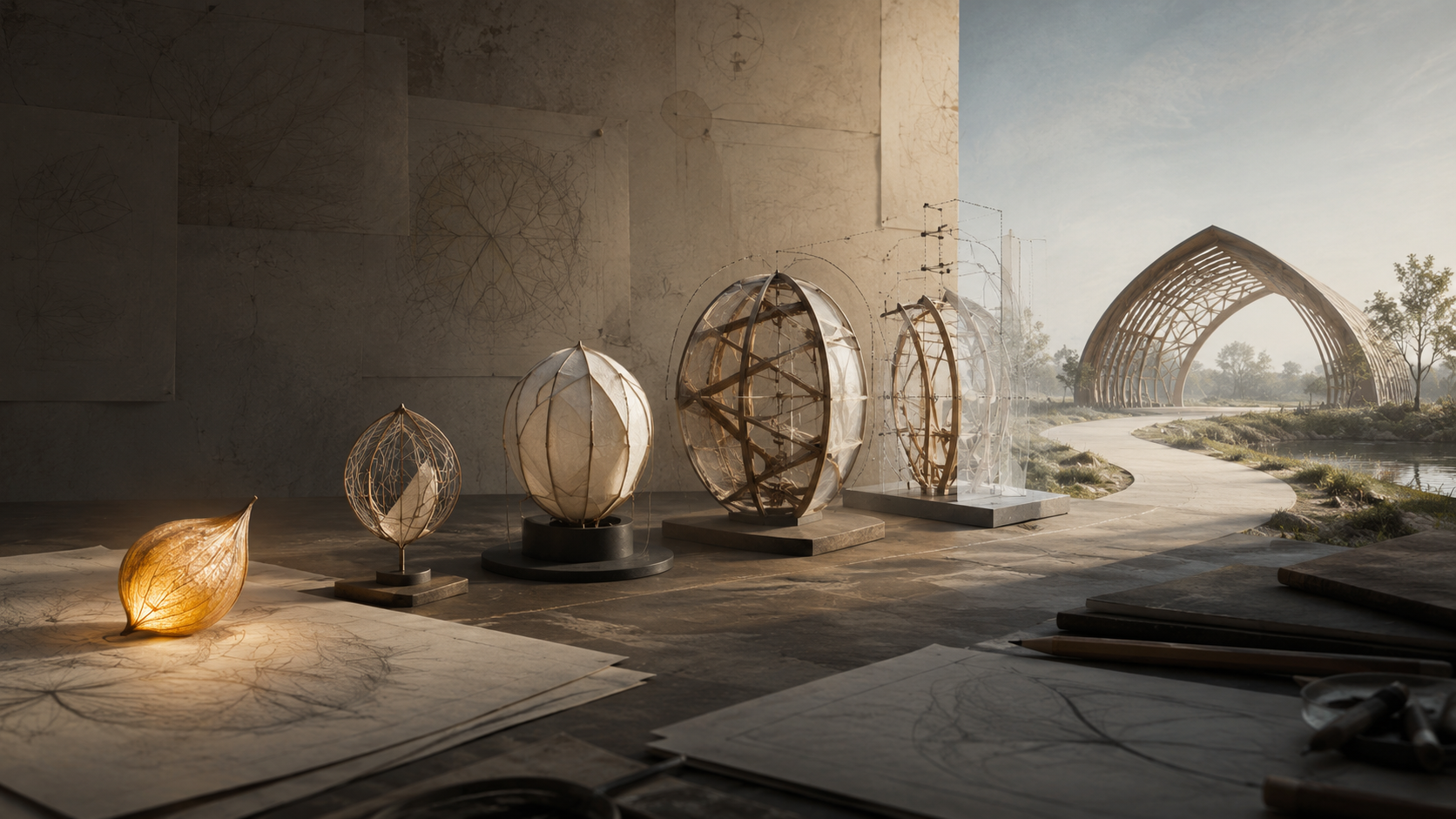
Ideas at the Limit is Alkemata’s space for asking those questions. We begin with a modest proposal, push it as far as logic and technological capability allow, examine what it would do to people and institutions, and then work backwards towards a practical experiment.
Radical is a method, not a mood
Radical thinking is often confused with speculation. Here it has a more disciplined meaning: returning to the root of an idea and refusing to stop at its most familiar form. If the proposal is a quieter social network, the question is not simply which buttons to remove. It is whether an online network could protect attention rather than consume it. If the proposal is AI for government, the question is not only where to install a model. It is what a public institution would look like if knowledge could move more easily while responsibility remained unmistakably human.
The purpose is not to make every idea larger. Following an idea honestly may reveal that it should remain small, local or manual. It may show that the technology is unnecessary, that the apparent obstacle is institutional, or that success would create a worse problem than the one being solved. Reaching that conclusion is progress.
Explore: change the question
The first step is to preserve the original intuition before it hardens into a solution. What human difficulty, neglected possibility or surprising mechanism made the idea interesting? Who experiences the problem, and what would improve in their life or work if it were addressed?
We then remove inherited constraints one at a time. What if computing were cheap? What if the system could be used by a million people? What if it did not need to resemble an app? What if the important result happened offline? What if adoption had to occur inside a court, laboratory, municipality or family rather than through an individual consumer?
This is where a simple proposal can change scale and nature. A feature may become a professional practice. A product may become shared infrastructure. A technical protocol may become a new way of distributing authority. The idea at the limit is the most consequential version that remains internally coherent—not the most spectacular version we can describe.
Understand: expose the machinery
Possibility alone is not enough. Every radical form depends on mechanisms: data, energy, interfaces, standards, maintenance, skills, organisations and incentives. It also changes who can see, decide, refuse and correct.
Each exploration therefore passes through several lenses. The scientific lens asks what is physically or computationally possible and what evidence is missing. The institutional lens asks how law, governance, rights and professional responsibility would shape the system. The builder’s lens asks who would operate it on an ordinary Tuesday, how failures would be noticed, and whether the system could be repaired or abandoned.
These lenses are deliberately allowed to disagree. A technically elegant system may be institutionally unacceptable. A legally compliant system may be unusable. A compelling public vision may depend on maintenance work that nobody is willing to fund. Understanding an idea means making those tensions visible rather than resolving them with optimistic language.
Find the counter-limit
Every idea has a point at which its success becomes dangerous. A tool that coordinates people can become a mechanism of surveillance. A measure of trust can become a social ranking. Automation that removes repetitive work can gradually remove the knowledge needed to detect mistakes. A system designed for participation can favour those with the most time, confidence or technical fluency.
We therefore ask not only “How far could this go?” but also “Where must it stop?” Some actions should remain contestable. Some encounters should remain private. Some decisions need identifiable human ownership. Some systems should degrade gracefully rather than make people dependent on permanent connectivity, a vendor or a model they cannot inspect.
This counter-limit is not an objection added at the end. It changes the design from the beginning.
Shape: work backwards
Once the most ambitious coherent form and its dangers are visible, we return to the present. What is the smallest experiment that could teach us something real?
The first step may involve no software. A process can be simulated manually with a small group. A new public-service rule can be tested against synthetic cases. A proposed interface can be represented with paper. The aim is not to demonstrate that the original idea was correct, but to expose its assumptions cheaply and reversibly.
If the first test produces useful evidence, the next form may be a narrow prototype. Only later should it become an operational tool, shared infrastructure or a new institution. At each stage, the question is what has been learned, what power has been created, and whether people remain able to understand, challenge and leave the system.
A collection of living project dossiers
Ideas at the Limit will contain proposals at different stages. Some will remain thought experiments. Some will become prototypes. Others will be merged, paused or abandoned when their central assumption fails. That history matters. A project dossier should show how an idea changed under criticism and contact with reality, not pretend that it emerged fully formed.
This section replaces the role once played by the Alkemata discussion forum. It is not a new public forum. Readers can propose cases, question assumptions or offer expertise through the Collaborate page, but selection, synthesis and publication remain editorial work.
The promise is simple: begin with human life, understand the machinery, push the reasoning to its limit, and return with something that can be tested.
Author
What concrete example would confirm or challenge this article?
Choose a reaction, write a comment, or ask your AI assistant to send a proposal for review. Comments are reviewed before publication.