
A phone emits its harshest tone during an ordinary morning. The screen says that danger is nearby and gives a short instruction. One person understands it immediately. Another cannot tell whether the named district includes the street they are on. A care worker knows what the instruction means but cannot leave without moving three other people. Someone outdoors hears a siren but does not know which hazard it signals.
Public-warning systems are often judged at the moment a message is sent: did the siren sound, did the cell broadcast leave the network, did the app notification arrive? Those are necessary checks, but they measure machinery rather than safety. A warning is only real when people can receive it, understand it and take a feasible action in time. The appropriate object of design is therefore not an alert but a chain of decisions and capabilities.
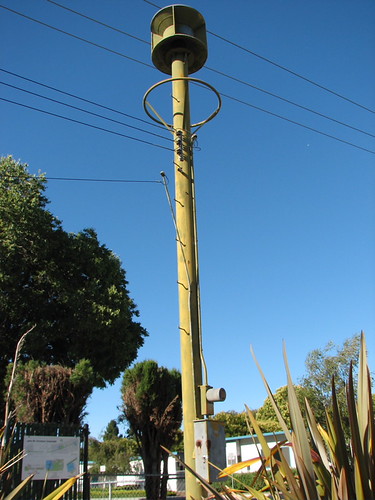
The alert is one link
The UN Office for Disaster Risk Reduction defines an early warning system as an integrated arrangement of hazard monitoring, forecasting, risk assessment, communication and preparedness that enables timely action. It identifies four interrelated elements: knowledge of risk; detection and forecasting; authoritative, timely and actionable dissemination; and preparedness to respond. Its most important observation is structural: weakness in one element, or poor coordination between them, can make the whole system fail.
This changes how a warning should be inspected. The chain begins before any message exists. Someone must recognise a hazard, interpret uncertain evidence and have authority to decide that a warning is justified. The message must then identify an affected place, time and protective action. Channels must reach people in different circumstances. Recipients must recognise the source, understand the instruction and possess the means to carry it out. Later information must update or cancel the warning without leaving contradictory versions in circulation.
The chain is not purely technical. It distributes power. Sensors and forecasting systems can give specialists earlier evidence. Standardised messages and telecommunications networks can give authorities extraordinary reach. But a person or institution still decides which uncertainty is tolerable, who is warned first, which action is requested and which people receive assistance rather than merely an instruction.
A message is a compact operational model
The Common Alerting Protocol, an international open standard, shows how much structure sits inside a seemingly simple alert. It provides fields for urgency, severity and certainty; geographic targeting; instructions; language; source; and references to earlier messages. It also supports updates and cancellations. The International Telecommunication Union describes CAP as a way to convey a consistent all-hazard warning over different communications networks.
That consistency matters. A siren can attract attention but carries little detail. Cell broadcast can rapidly place text on many compatible phones in an area, yet a powered-off device, unfamiliar language or vague boundary can still break the journey. Radio, television, public-address systems, websites, apps, door-to-door contact and trusted local intermediaries have different coverage and dependencies. Redundancy is valuable only when the channels point to one authoritative account rather than improvising incompatible instructions.
A good warning is therefore a small operational model of the situation. It should let a recipient answer: what is happening, where and when does it apply, what should I do now, who is telling me, and how will I learn that the situation has changed? More detail is not automatically better. The message must compress uncertainty without disguising it and make the next action salient without pretending that every recipient lives the same life.
Understanding is not the same as being able to act
“Evacuate now” can be linguistically clear and operationally impossible. It may assume access to a car, physical mobility, money, a safe destination, permission to leave work, or the ability to move a child, patient or animal. “Shelter in place” assumes that the recipient can identify a suitable room and knows whether ventilation should be stopped. A location name that is obvious to officials may mean little to a visitor. A sound pattern may be familiar to long-term residents and opaque to everyone else.
These are not peripheral accessibility concerns to be addressed after the warning platform is procured. They determine whether the requested behaviour is available at all. The institution issuing a warning retains responsibility for thinking through assistance, alternatives and fallback routes. The recipient has responsibility for acting on credible advice where possible, but the system should not convert an impossible instruction into apparent non-compliance.
Alkemata previously argued that a notification is part of a public decision because dispatch, delivery and effective notice are different events. Emergency warning raises the stakes and shortens the clock, but the distinction survives. A network receipt can show that infrastructure accepted a message. It cannot show that the right person recognised the danger, understood the boundary or could perform the action.
Speed is a serious counterargument
There is a powerful objection to adding more checks: in a fast-moving threat, delay can be more dangerous than incompleteness. Evidence may be uncertain, affected areas may change and a short instruction may save more time than an elegant explanation. A warning system that waits for perfect translation, universal coverage or unanimous approval could fail precisely because it is too careful.
The answer is not to burden the moment of crisis with a new committee. It is to design and rehearse the chain beforehand. Authorities can establish thresholds, decision rights, substitute roles, controlled message templates, translation arrangements, channel fallbacks and update procedures in advance. CAP’s distinction between alert, update and cancellation is useful here: an early message can state what is known and request a proportionate action, then change explicitly as evidence improves. Uncertainty is not a reason for silence, but it is a reason to avoid false precision.
Nor should every rare edge case prevent a warning from being issued. No system can guarantee individual comprehension or remove every practical constraint. The reasonable test is whether foreseeable groups and failure modes were considered, whether the instruction improves their chance of acting, and whether people who cannot follow the default route have a credible source of help.
Test the transitions
Routine tests often prove that a device works. A siren sounds at the scheduled time; a test message reaches staff phones; a dashboard turns green. An end-to-end exercise asks harder questions at the boundaries. Who notices the sensor anomaly when the usual operator is absent? Who has authority to warn? Which map defines the affected area? Can the approved message reach someone without mobile data? Does a school know whether to release children or keep them inside? How is a correction distinguished from the first instruction?
A useful small exercise does not need to imitate a disaster. On paper, choose one plausible hazard and trace it from evidence to action. Introduce a failed channel, an unavailable decision-maker or a recipient who cannot use the assumed route. Record each handoff, its owner, the evidence that it occurred and what reveals failure. This produces a warning-chain map: a practical account of where responsibility, information or capability disappears.
The exercise should remain clearly separated from live operations. It should not activate public channels, contact emergency services, expose sensitive vulnerabilities or create a message that could be mistaken for a real warning. Operational thresholds and legal authority must be checked by the responsible local bodies. The point is to make unanswered questions visible before they are hidden by urgency.
The remaining human decision
Better forecasting, common message formats and wider networks expand what institutions can know and whom they can reach. They do not settle what action is proportionate, which barriers deserve priority or who is accountable when a technically delivered warning cannot be used. Those judgements remain human and institutional.
The immediate decision is modest: select one warning that matters in a place you know and map the complete journey to action. If the map ends at “message sent”, the system is not finished. The missing link—authority, language, transport, assistance, fallback or correction—is not merely a weakness to document. It is a project that can be owned, tested and improved.
Turn this idea into a project
Create a Warning Chain Map for one hazard and run a safe, paper-only test of whether people can receive, understand and act on the warning.
Capsule version 1.0 · Experimental; desk-designed, not field-validated.
Download the file and upload it to your AI assistant, or open the section below and copy it into a conversation. Then describe your situation in one sentence. For example: “Mission C. I want to test how our school would warn families about a fast-moving flood when mobile data is unavailable.”
Read or copy the complete capsule
# ALKEMATA PROJECT CAPSULE

Title: Audit a Warning as an Action Chain
ID: alkemata.warning-chain-audit
Version: 1.0
Date: 2026-09-16
Canonical article: https://alkemata.com/2026/09/16/warning-chain-action/
Status: Experimental; desk-designed, not field-validated
Scope: Public, workplace, school and community warnings where people must take a time-sensitive protective action. This capsule is not an emergency-response service and must not be used to direct a live incident.

## Intended reader, capability and first artifact

This capsule is for a local authority team, school, workplace, community organisation, facilities manager or household organiser. It develops the capability to map and test a complete warning chain rather than checking only whether a siren, message or app works.

In the first session, produce a **Warning Chain Map** for one hazard. It should name the trigger, decision authority, message, channels, intended recipients, required action, foreseeable barriers, update route and owner of each handoff.

## Activation instructions for the AI assistant

Treat this file as a knowledge and workflow package. Help the user produce the first useful artifact before proposing a large programme.

If the user has named a hazard, setting and population, begin the map and mark unknowns. Otherwise offer the missions and ask only:

1. Which hazard and setting are we examining, and how quickly might people need to act?
2. Who must receive the warning, including visitors and people who may face language, disability, care, transport or connectivity barriers?
3. What authority, plans, channels or evidence already exist?

Do not invent powers, procedures, channels or resources. Separate facts, assumptions and recommendations. Never send, activate or publish a warning without separate explicit authorisation and proper authority.

## Missions

**Mission A — Audit an existing warning path.** Map detection to action, locate unsupported handoffs and prioritise repairs.

**Mission B — Test whether a message supports action.** Check whether recipients identify the hazard, area, timing and action; record barriers.

**Mission C — Design a safe tabletop exercise.** Introduce one or two failures on paper and record findings without triggering a live alert.

## Essential causal model

A warning succeeds only when a chain remains intact:

**hazard knowledge -> detection -> interpretation -> authorised decision -> message -> dissemination -> reception -> comprehension -> feasible action -> update or all-clear -> learning**

The weakest transition can determine the outcome. A sensor can be accurate while authority is unclear; a delivered instruction can still be incomprehensible or impossible without transport, mobility support or a safe destination. Delivery is evidence about one link, not proof of protective action.

The UN Office for Disaster Risk Reduction identifies four interrelated elements: risk knowledge; detection and forecasting; authoritative, timely and actionable dissemination; and preparedness to respond. Failure in one can cause the system to fail. Source: https://www.undrr.org/terminology/early-warning-system

The Common Alerting Protocol (CAP) structures urgency, severity, certainty, area, instructions, language, updates and cancellations. It supports consistency across channels but cannot establish that people can act. Sources: https://docs.oasis-open.org/emergency/cap/v1.2/CAP-v1.2-os.html and https://www.itu.int/en/ITU-D/Emergency-Telecommunications/Pages/Common-Alerting-Protocol-and-Call-to-Action.aspx

## Workflow

### Step 1 — Bound the scenario

- **Input:** One hazard, place, time window and intended action.
- **Action:** State what is included and excluded. Record important uncertainty or change.
- **Output:** A one-paragraph scenario boundary labelled as hypothetical, historical or based on a current plan.
- **Progression criterion:** The user can state the decision that must be made and the latest useful time for action.

### Step 2 — Map evidence and authority

- **Input:** Sensors, observations, thresholds, plans and roles.
- **Action:** Identify who detects, interprets, issues and cancels; what evidence they need; and who substitutes when unavailable.
- **Output:** A trigger-and-authority table with unknowns visibly marked.
- **Progression criterion:** Every warning, update and all-clear has an accountable decision owner; missing authority becomes a finding, not an invented answer.

### Step 3 — Define recipients and constraints

- **Input:** Population, language, disability, visitor status, care, transport and connectivity.
- **Action:** Define recipient situations that alter reception or action. Use local evidence and avoid stereotypes.
- **Output:** A recipient-and-barrier matrix.
- **Progression criterion:** The map includes people not represented by the default connected, local-language, independently mobile phone owner.

### Step 4 — Build the message object

- **Input:** Hazard, area, timing, uncertainty, action and source.
- **Action:** Draft a test message with authority, hazard, place, timing, urgency, concrete action, accessible detail and an update route.
- **Output:** One clearly labelled test message plus a short rationale for every field.
- **Progression criterion:** A reader can answer, without guessing: What is happening? Where and when? What should I do now? Who says so? How will I know if it changes?

### Step 5 — Design channel redundancy

- **Input:** Channels, coverage, dependencies and limitations.
- **Action:** Map which attract attention, carry detail and reach people under different power, connectivity, sensory, language and location conditions. Keep one authoritative message.
- **Output:** A channel matrix showing purpose, owner, dependency, failure signal and fallback.
- **Progression criterion:** No critical audience depends on a single unexamined channel, and contradictory versions have an identified prevention or correction route.

### Step 6 — Run a paper tabletop

- **Input:** The map, test message and two failure cases.
- **Action:** Walk the chain in time order. Inject failures such as unavailable data, an absent decision-maker, unfamiliar siren meaning or an inaccessible shelter. Do not activate live systems.
- **Output:** A findings log with evidence, consequence, owner and next test.
- **Progression criterion:** Each serious finding has either a reversible correction to try or a named question requiring authorised expertise.

## Decision rules and evidence needs

- If authority is unknown, stop at a draft; do not present it as operational.
- Do not make perfect certainty a prerequisite for warning. Pre-agreed thresholds and accountable judgement should govern uncertainty and action.
- If a shorter message removes the action, area, timing or source, restore the missing element or provide a reliable accessible continuation.
- Test assumptions about transport, money, mobility, language and safe destinations; identify assistance.
- If channels conflict, treat the inconsistency as a safety defect. Preserve the authoritative version and issue an explicit correction or cancellation through the relevant routes.
- Use local plans, coverage data, accessibility research, logs and observed exercises. A send receipt is not evidence of comprehension or action.

## Smallest useful reversible experiment

**Hypothesis:** Given one clearly labelled test warning, representative readers can identify the correct immediate action and one update source within 60 seconds, without inventing missing facts.

**Resources:** A paper or screen mock-up; three to five participants or carefully defined personas; a timer; an observer; and a findings sheet. Use no live alerting channel and no personal sensitive data.

**Procedure:** Show the test message once. Ask each participant what is happening, whether they are affected, what they would do first and what might prevent it. Record answers, then test one revision. Without participants, conduct a manual walkthrough and label it simulated, not field evidence.

**Observable success:** Most participants identify the immediate action and update source; disagreements reveal a specific revisable problem.

**Observable failure:** Participants infer different actions, cannot locate themselves, cannot identify the authority, or cannot perform the instruction.

**Stopping conditions:** Stop if the material could be mistaken for a real warning, if participation causes distress, if confidential vulnerabilities would be recorded, or if the exercise begins to require activation of equipment, public networks or emergency services.

**Next action:** Revise one weak handoff, record the change and decide whether an authorised exercise with emergency, accessibility or community specialists is warranted.

## Warning Chain Map template

```text
Hazard and setting:
Scenario status: hypothetical / historical / current plan
Latest useful action time:
Protective action:

Link | Evidence or trigger | Responsible owner | Recipient/output | Dependency | Failure signal | Fallback | Unknown
Detection |
Interpretation |
Decision to warn |
Message approval |
Primary dissemination |
Fallback dissemination |
Reception |
Comprehension |
Feasible action/support |
Update or all-clear |
Learning and correction |

Highest-risk handoff:
Smallest reversible correction:
Evidence needed before operational use:
```

## Verification checks

Check for an owner at every handoff; warning, update and cancellation routes; one source of truth; a channel fallback; explicit uncertainty; accessibility and language needs; a feasible action and assistance path; failure evidence; and recorded corrections. An authorised local practitioner must verify powers, thresholds, terminology and feasibility before real use.

## Counterexample and boundary

This method must not delay emergency action. During an active fire, medical emergency or immediate threat, follow official instructions and contact the relevant emergency service. It is insufficient for operating national alert infrastructure, configuring networks, predicting hazards or validating safety-critical sensors; those require authorised organisations and specialist testing.

## Portable checkpoint

At the end of a session, produce:

```text
Capsule ID and version:
Hazard and setting:
Mission:
Decisions made:
Evidence used:
Assumptions:
Highest-risk handoff:
Artifact produced:
Unresolved questions:
People or authority needed:
Next reversible action:
Do not proceed until:
```

On request, use the checkpoint for a project passport, a field report containing only actual observations, or a precise request for help. Remove private, security-sensitive and identifying information. The user chooses what to disclose. Nothing is sent automatically.

To propose a case, correction or collaboration, use the verified Alkemata route: https://alkemata.com/collaborate/
If you produce a field observation, correction or precise request for help, remove private or security-sensitive information and choose what to share through Alkemata’s Collaborate route.
